The most data-literate people I have ever worked with were also, in many cases, the most depleted. That paradox is what set me on the path from biohacking to BioHarmony. It is the starting point for everything I want to say here.
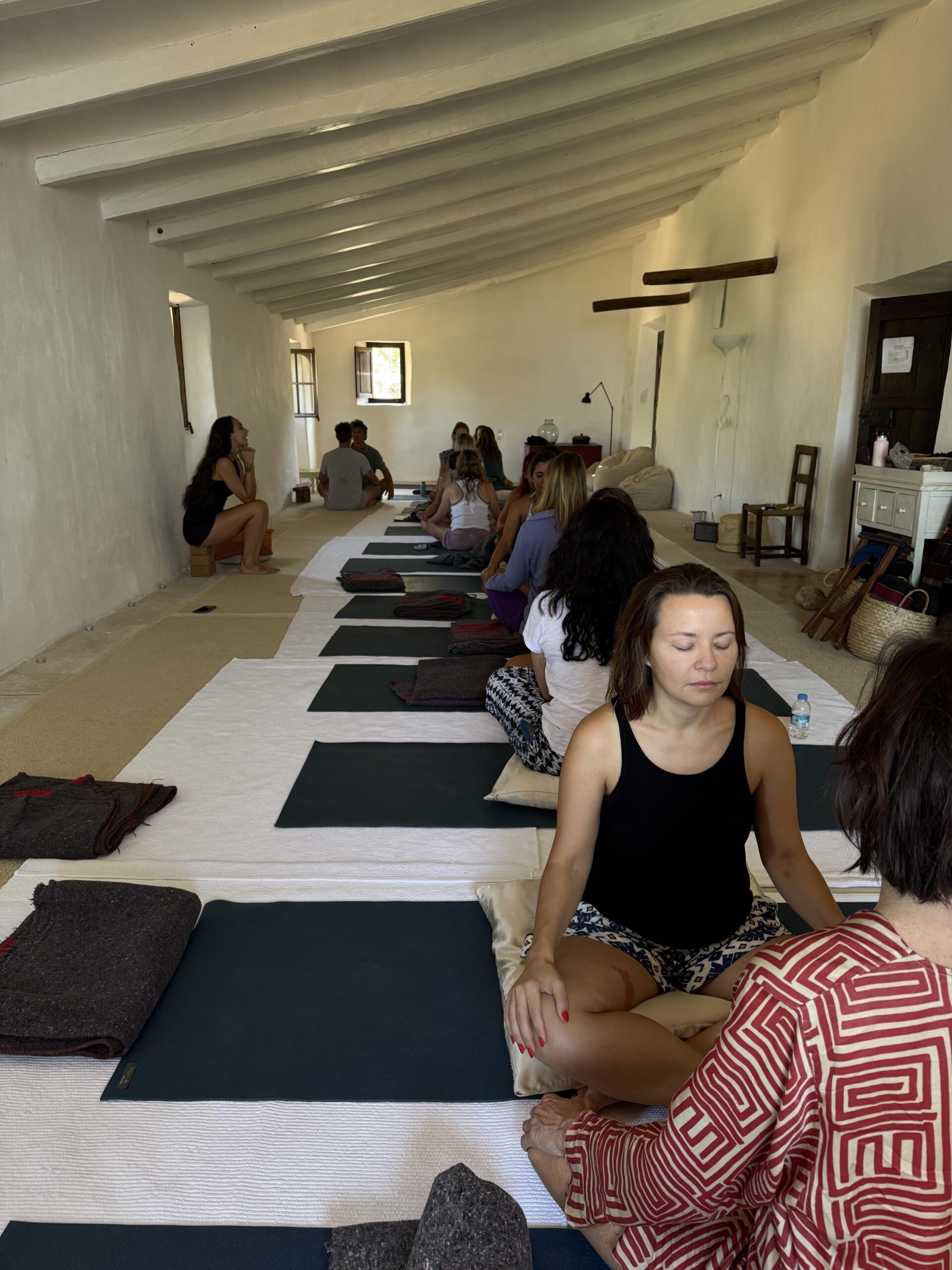
I held a BioHarmony session at the Health Optimisation Summit retreat. The gathering brought together clinicians, entrepreneurs, athletes, and researchers — people who track, test, supplement, and optimise with genuine rigour. People who know their biomarkers better than most GPs know their patients. What I witnessed was a community beginning to feel its way toward something the data has never captured.
That is the shift worth naming. And it is larger than one retreat.
From biohacking to BioHarmony: what the optimisation world built
For the better part of a decade, the health optimisation community has centred a particular kind of intelligence: biological, biochemical, quantifiable. This is genuinely valuable. Testing illuminates what self-report obscures. Wearables reveal patterns that subjective experience misses or misinterprets. Continuous glucose monitors show the real metabolic cost of foods that seem virtuous and the unexpected benefits of ones that don’t. Detailed blood panels identify risk factors years before they become clinical events.
These tools form part of my clinical practice. I recommend them to patients and credit them with genuinely shifting health outcomes in meaningful ways.
But a framework built entirely on measurement has a fundamental limitation: it can only tell you what it knows how to measure. The most important dimensions of health and longevity remain largely invisible to these instruments. The quality of a person’s nervous system regulation, their capacity for genuine rest, the depth of their relational life — none of this appears on any panel or dashboard.
The community is ready for more
What I observed in Corfu was something I have not always seen in this world: genuine appetite for the unmeasured.
People who could tell you their deep sleep percentage, their HRV trend over the past month, and their ApoB trajectory sat in a circle and breathed together. They moved with a deliberate awkwardness that bypassed the performance self-consciousness that professional gatherings tend to produce. They witnessed each other. Some of them encountered something they had not encountered in a long time, their own interior, without a dashboard between them and it.
This is not a small thing in a community that has historically privileged the external and the quantifiable. It represents a genuine opening. Part of what is driving it is an honest recognition: the optimisation approach, however rigorous and well-intentioned, has not always produced the health it promised.
People are doing everything right and still feeling subtly depleted. They sleep poorly despite perfect sleep hygiene. Anxiety hums beneath composed exteriors the biomarkers cannot explain. Beneath the protocol compliance, something important is missing. The move from biohacking to BioHarmony begins, in my experience, when that feeling can no longer be ignored.
Emotional health as the missing variable
As a medical doctor and psychiatrist, I have spent my career at the intersection of physical and psychological health. That training gave me a particular lens. What medicine calls “mental health” and what it calls “physical health” are not separate categories. They are deeply, dynamically, bidirectionally connected — running through shared biological machinery that conventional siloed medicine has been late to acknowledge.
The HPA axis, the stress response system, does not distinguish between a threat to physical safety and a threat to relational safety. It responds to emotional load with the same cortisol secretion and autonomic activation as it responds to genuine physical danger. Chronic emotional suppression, unprocessed grief, the background vigilance of a nervous system that never fully feels safe — each of these produces measurable physiological consequences. They show up in HRV, in inflammatory markers, in cortisol rhythms, in sleep architecture.
This is not a soft argument. It is an argument about mechanism. And it is the core of why the shift from biohacking to BioHarmony is not a retreat from rigour — it is an expansion of it.
I was part of the founding clinical team at the longevity clinic at Six Senses. That path led me into a deep relationship with breathwork — not as a wellness trend, but as a clinical tool. The evidence for its role in nervous system regulation and trauma processing is real. The kind of autonomic recalibration it makes possible is difficult to achieve through other means. That experience shaped BioHarmony significantly.
What BioHarmony looks like in practice
In Corfu, we worked through a carefully sequenced container. Each element was chosen for its specific effect on the nervous system, and ordered to build on what came before.
We began with playful movement — to drop the social armour, activate the ventral vagal state, and shift the group out of performance mode into something more open and embodied. This is not warm-up in the conventional sense. It is a deliberate neurological precondition for the work that follows.
Then partnered breathing and co-regulation: the shared regulation of nervous systems in proximity. Research in attachment neuroscience and polyvagal theory consistently identifies this as one of the most potent regulatory mechanisms available. We are not designed to regulate alone. Our nervous systems are calibrated in relationship, and they restore most efficiently there.
Then conscious connected breathwork, held within a musical arc that I design specifically to support the emotional and somatic journey of the session. Breath gives us voluntary access to an otherwise involuntary system. Skilled facilitation of conscious breathing creates conditions for emotional processing and somatic release. It also produces a quality of genuine nervous system rest that supplements and sleep hygiene protocols can approximate but rarely fully deliver.
We closed with integration and group coherence. This is the consolidation of what arose — translating experience into meaning, and lifting the group’s collective emotional state toward possibility.
The future of health is relational
Years of clinical work and my own health journey have brought me to the same conclusion: healing rarely happens in complete isolation. The practices that produce the most lasting change in nervous system regulation, emotional health, and genuine wellbeing are almost always relational. They happen in the presence of other people.
This is not a rejection of individual practice. Meditation, breathwork, movement, sleep hygiene, nutritional strategy, these all matter enormously, and I recommend them all. But genuine human connection adds something individual practice cannot replicate. Being seen without agenda, regulating alongside another settled nervous system, processing difficult material in a held group context — these require other people.
That is what the optimisation world is beginning to find its way toward. The shift from biohacking to BioHarmony is, I believe, one of the most important moves the field has made.
BioHarmony retreats bring together education, breathwork, somatic practice, movement, and relational work in carefully held residential containers. The next retreat is in Deià, Mallorca. Visit wellgevity.com/retreats to learn more.

Comments will display here